

Our Legacy
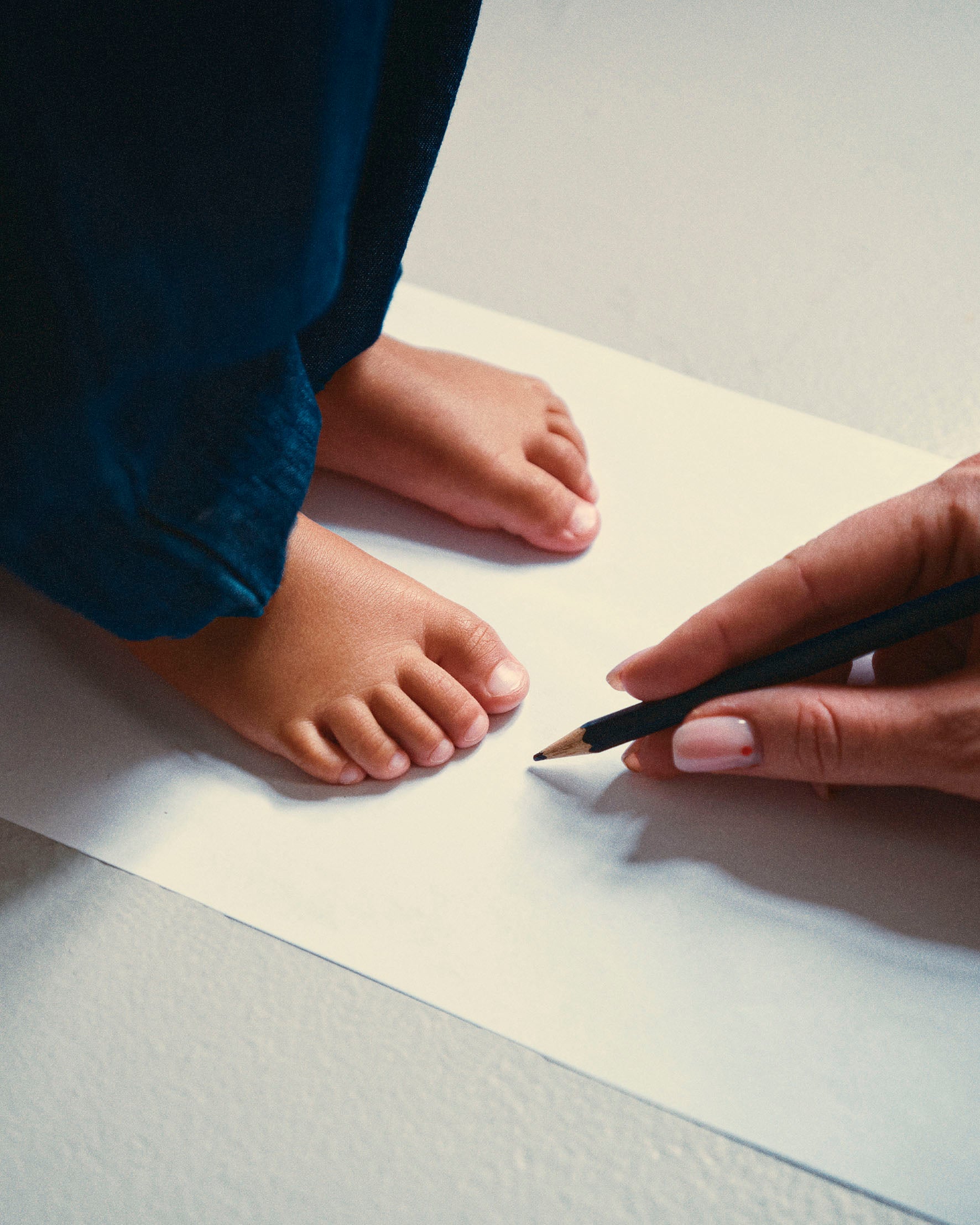
Since 1904, we’ve been supporting those first steps.
Every child takes their first steps just once. Those first steps mark the beginning of a life filled with movement, curiosity, and independence. They last only a moment, but they lay the foundation for everything that follows. For parents, they are among the first major decisions they make on their child’s behalf. For us, they are the reason Bundgaard has been around since 1904.

Original Style Guide, 1968
Shaped by Generations
For more than 120 years, we have worked to understand children’s movement and develop shoes that support them from their very first steps. Over generations, our knowledge has grown, our products have been refined, and our craftsmanship has been continuously honed. What has remained unchanged is our conviction that the development of children’s shoes must always be centered on the child.

Original Bundgaard shoes, ca. 1950

More than 120 years of experience and insight
The experience we have built up over more than a century cannot be measured in years alone. It is reflected in the thousands of observations, decisions, and improvements that have shaped Bundgaard across generations.
Every new insight into children’s development, every improvement in design and fit, and every deliberate choice of materials has contributed to the way we develop our shoes today. Development has never been a goal in itself, but a natural result of our desire to continually understand children’s needs even better.
Our legacy is therefore not about the past. It forms the foundation for the knowledge and craftsmanship we continue to build upon.


Thorvald Emil Bundgaard and His Family
The Founder of Bundgaard
Thorvald Emil Bundgaard was born in Gjern near Silkeborg on August 17, 1873. After passing his preliminary examination in Hammel, he became a lieutenant in the Quartermaster’s Corps and subsequently worked for attorney Nonboe in Varde. Around the turn of the century, he moved to Esbjerg.
In 1904, Thorvald took over an existing shoe factory in Esbjerg and founded Bundgaard Sko. This marked the beginning of a family business that would remain in the family for more than a century.
Thorvald was married to Alma, and together they had three children. Two of them, Kuno and Erik, would later carry on the business.
Discover our history →
1904 | The Beginnings of Bundgaard
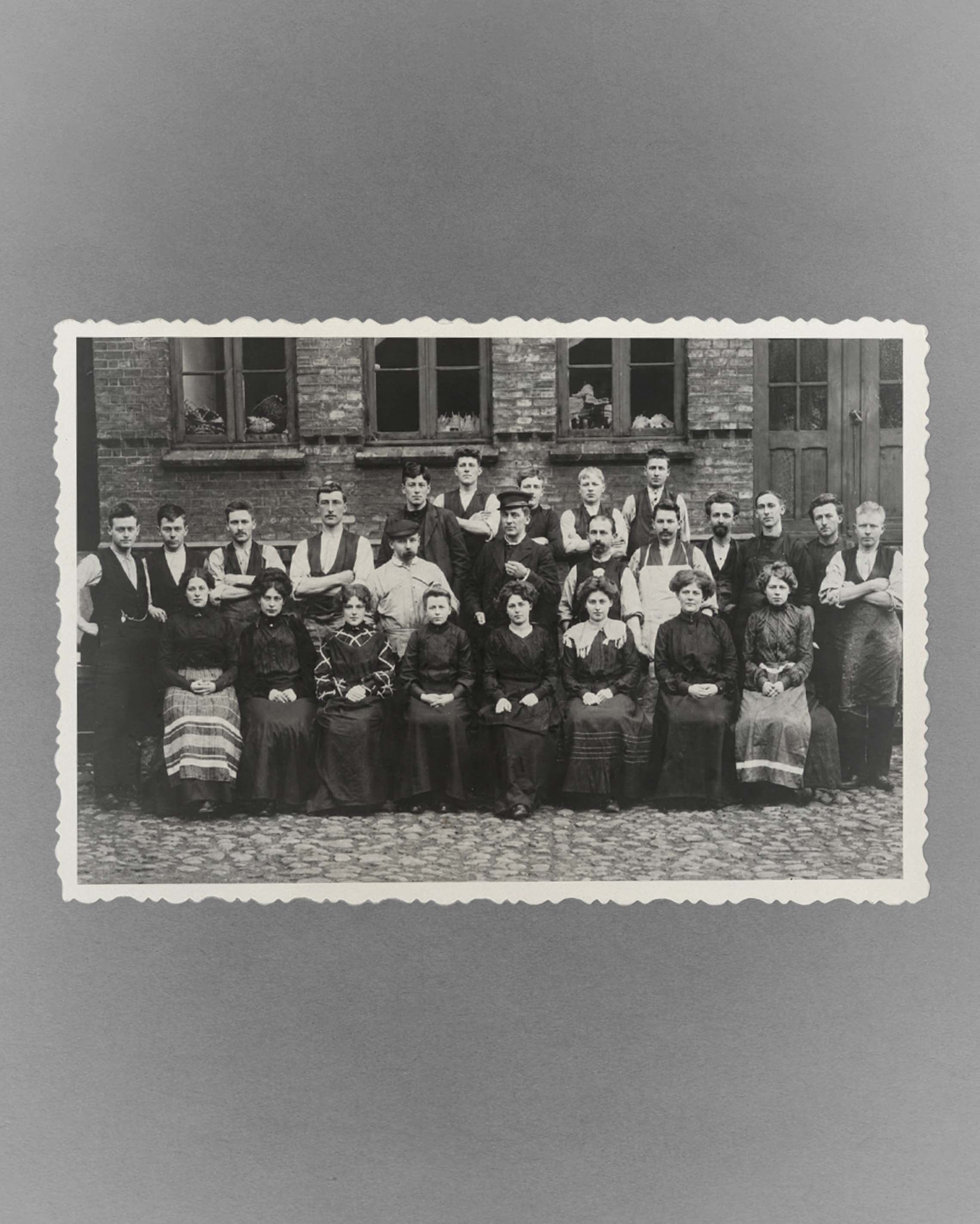
On April 1, 1904, Thorvald Emil Bundgaard took over an existing shoe factory in Esbjerg and founded Bundgaard Sko. This marked the beginning of more than 100 years of shoemaking history, during which the company was carried on through three generations of the Bundgaard family.
Factory workers outside the factory, 1906
1924–1943 | Second Generation
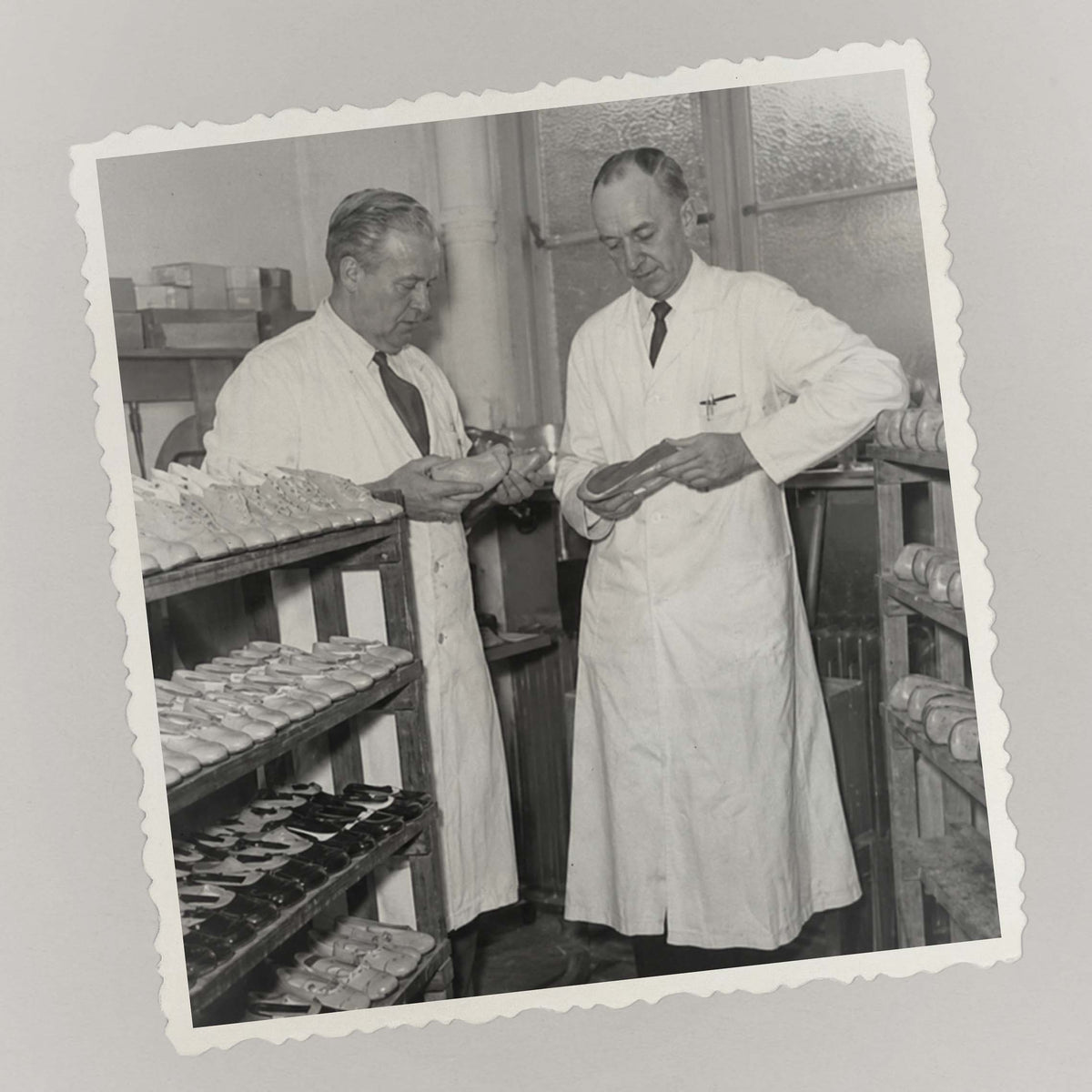
Thorvald’s eldest son, Kuno Bundgaard, joined the company in 1924 after studying at Niels Brock in Copenhagen and working for three years in Argentina. When Thorvald died in 1941, Kuno took over the management of the company. His younger brother Erik later joined the company and became a co-owner in 1943. Kuno was involved in organizational and board work, while Erik was closely involved in the day-to-day operations of the factory.
Kuno and Erik at the factory, 1954
1930–1950 | A Growing Focus on Children's Shoes
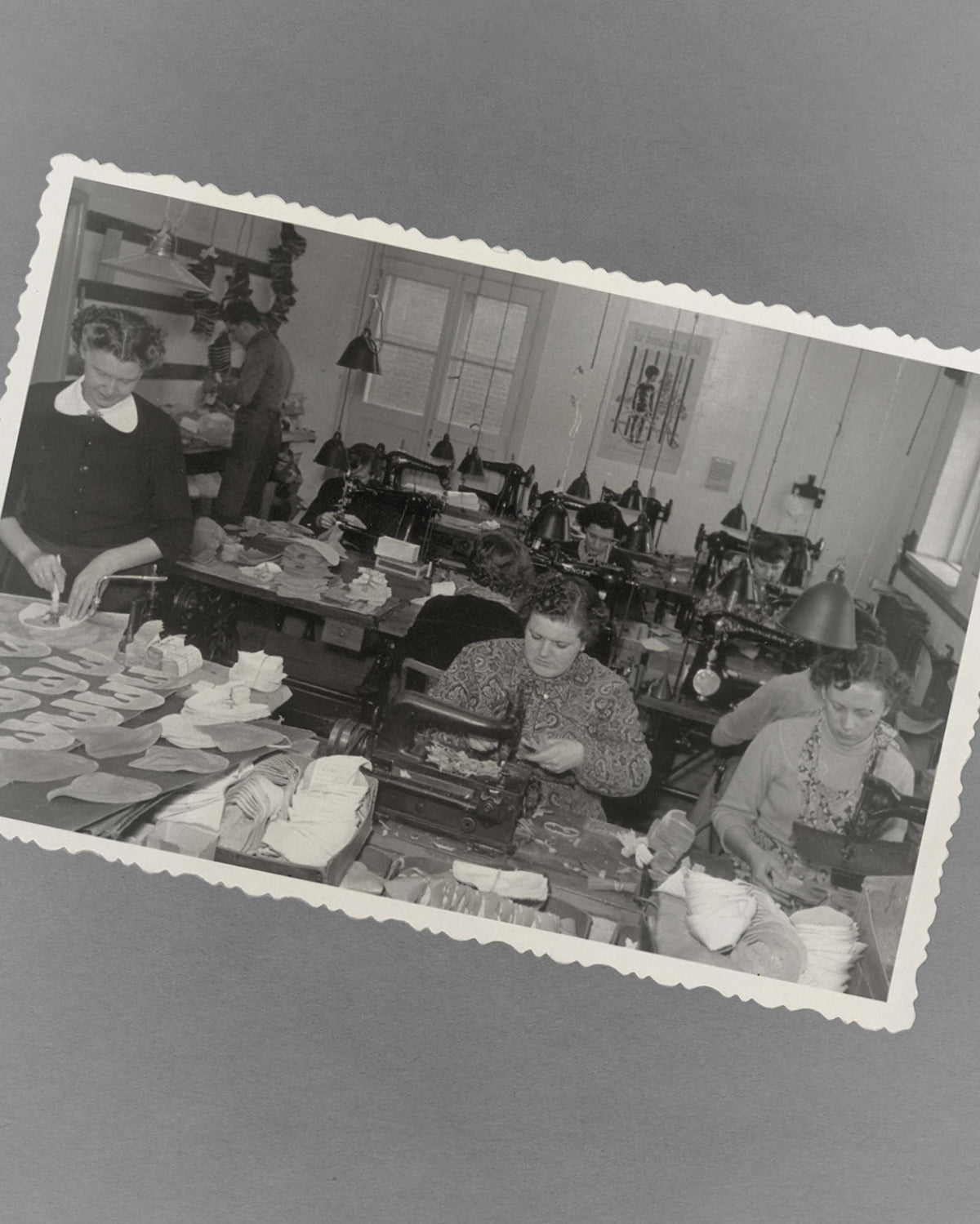
Children’s shoes became increasingly important in Bundgaard’s production. As understanding of children’s feet grew, it also became clearer that shoes for children needed to be developed with their specific needs in mind.
Through production, close relationships with specialized shoe retailers, and generations of experience in the shoemaking trade, Bundgaard’s knowledge of children’s shoes grew.
Factory workers at the factory, 1954
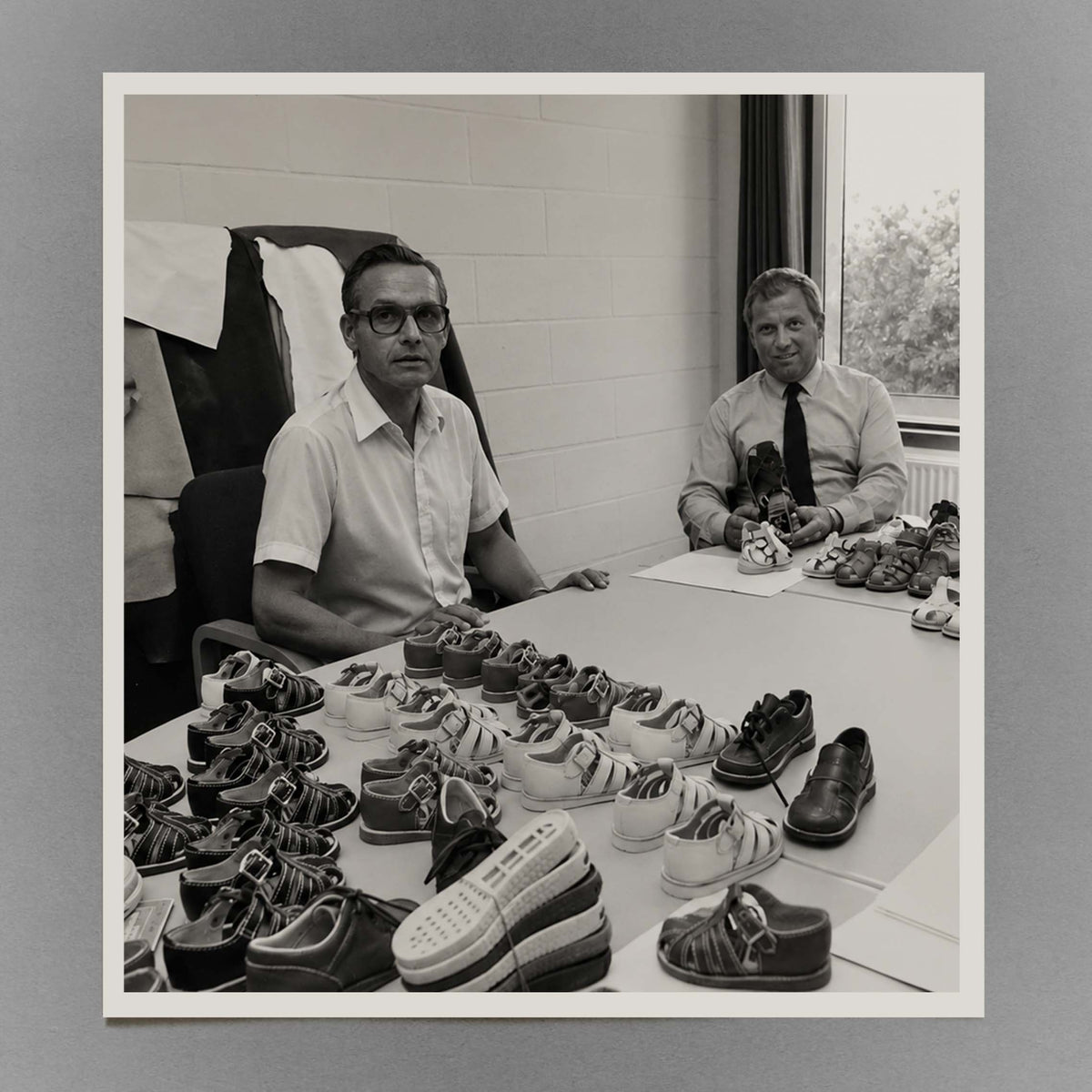
1968 | Third Generation
In 1968, Thorvald’s grandson, Jes Bundgaard, returned to Denmark after working in the footwear industry in Germany and joined the family business. There, he worked closely with his cousin Jens Bundgaard. Jens had strong technical expertise, while Jes focused on customers, product development, and international markets. They joined the company at a time when rising imports were putting pressure on the Danish footwear industry. For Bundgaard, this meant that product development and design took on greater importance.
Jens and Jes Bundgaard
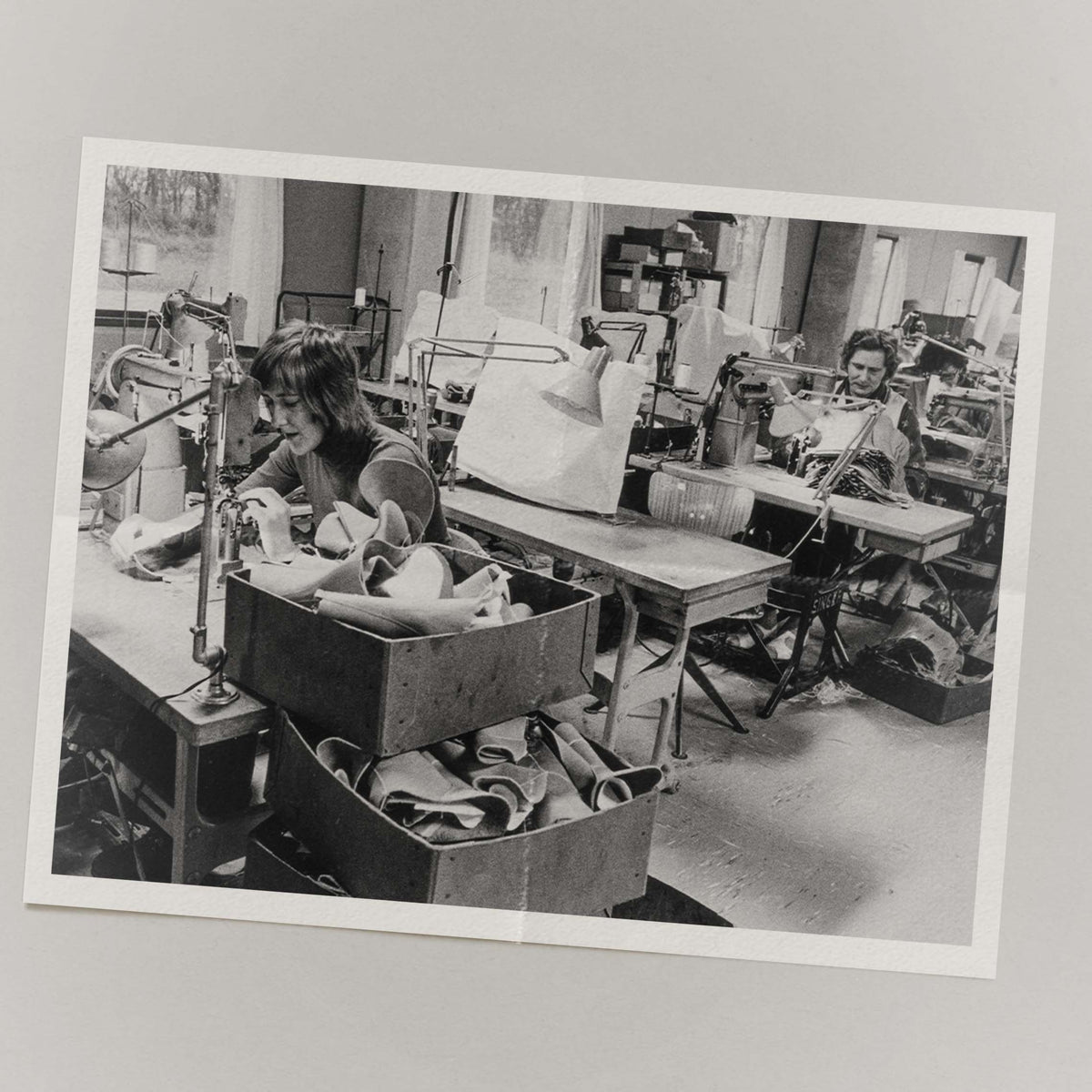
1972 | A New Factory
In 1972, Bundgaard moved from its old premises in central Esbjerg to a new factory on Ørnevej, built specifically for the company. The move marked a new chapter for the family-owned business and created a new framework for both production and product development.
Factory workers, 1974
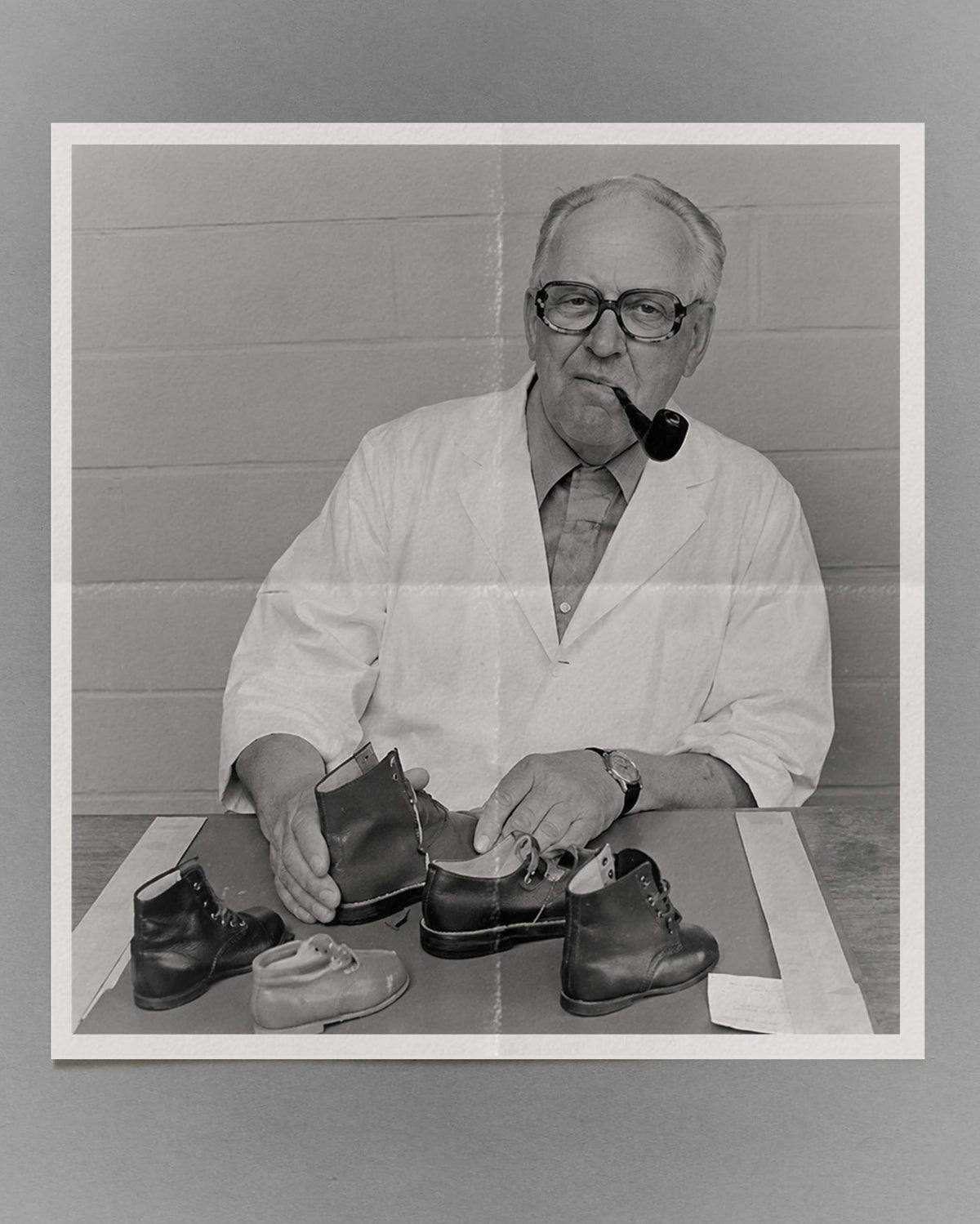
1970 | The Development of Bundgaard Shoes
Throughout the 1970s, increasing emphasis was placed on developing children’s shoes with Bundgaard’s own distinctive features. The company developed its own lasts and sole constructions rather than relying exclusively on standard components. This development was based on practical shoemaking expertise, close contact with retailers, and experience with how children’s shoes fit the foot and performed in everyday use.
Erik Bundgaard, 1979
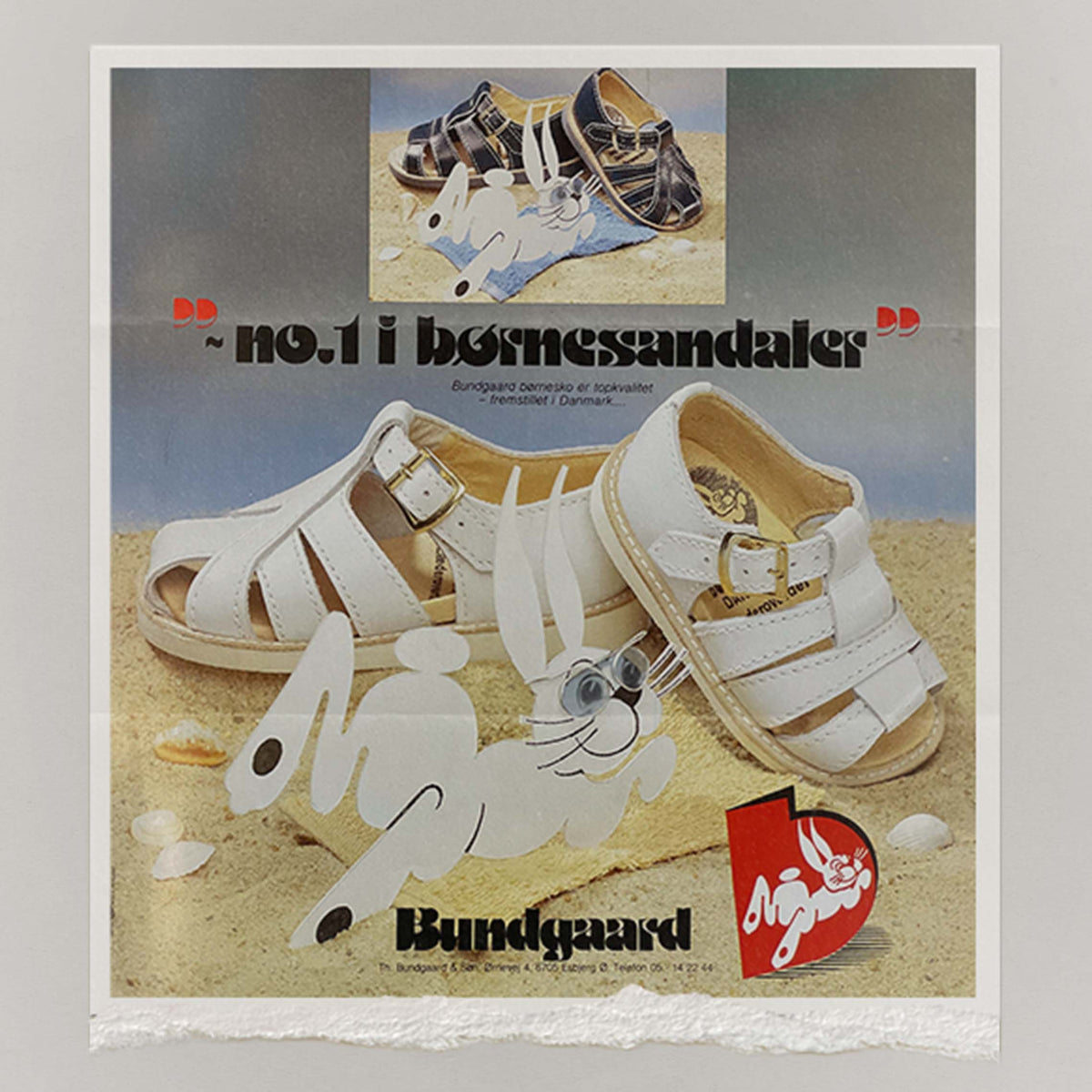
1970 | The Bundgaard Rabbit
Bundgaard’s rabbit logo had been created many years earlier, designed by a friend of the Bundgaard family. After a period during which the motif was not used, the original rabbit was rediscovered. It then found its way back onto the shoes and became a well-known trademark.
The rabbit played a practical role at Bundgaard retailers. If a child was reluctant to try on a new pair of shoes, the hunt for the little rabbit inside the shoe could make the fitting a little easier.
Advertisement, 1985
1970–1980 | From Family Name to Brand
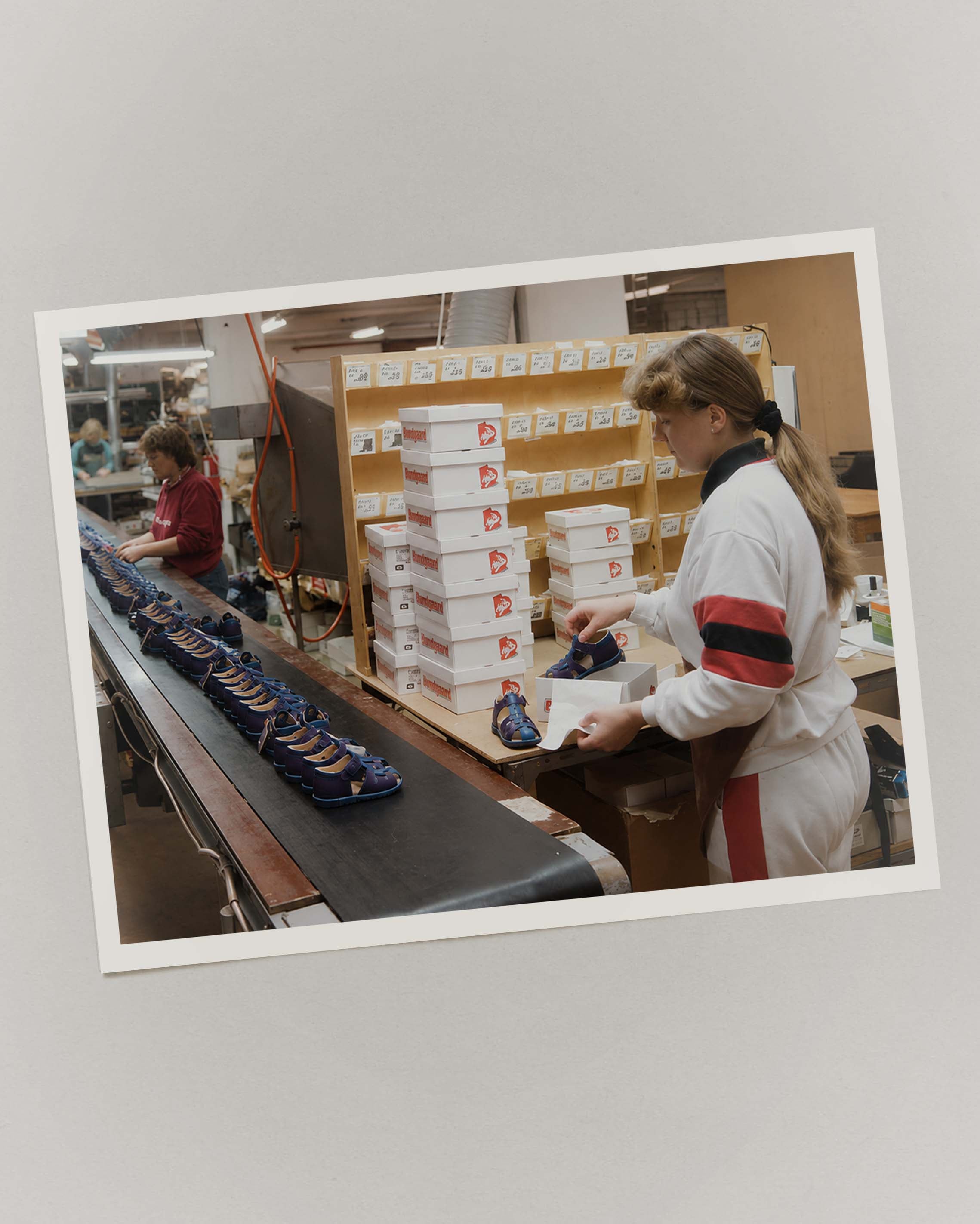
As Bundgaard developed a more distinctive approach to children’s shoes, awareness of the family name also grew. Retailers and customers increasingly began simply asking for “Bundgaard shoes.” This led to a greater focus on product differentiation, communication, and the Bundgaard name. What had started as the family name behind the company was evolving into a brand.
Factory workers at the factory, 1980
1980 | Beyond Denmark's Borders
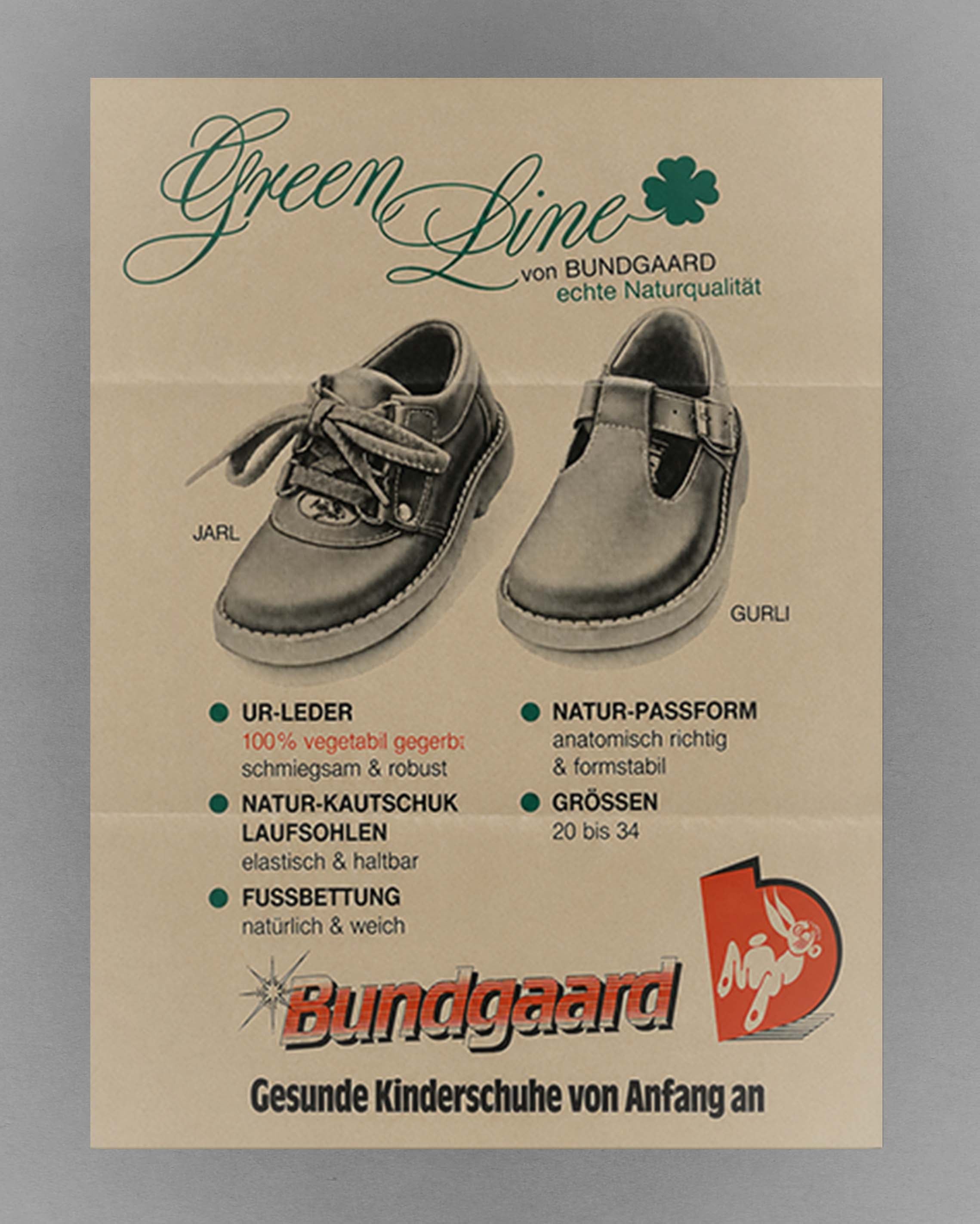
Changes in the Danish shoe industry led Bundgaard to increasingly turn its attention abroad, both in terms of production and growth. New production methods, techniques, and materials were tested, while international sales grew through retailers, agents, and relationships in new markets, particularly in Germany and Japan. Production was gradually internationalized, but product development and Bundgaard’s own approach to lasts, fit, and materials set the direction.
German advertisement, 1980
2004 | A Century in the Family
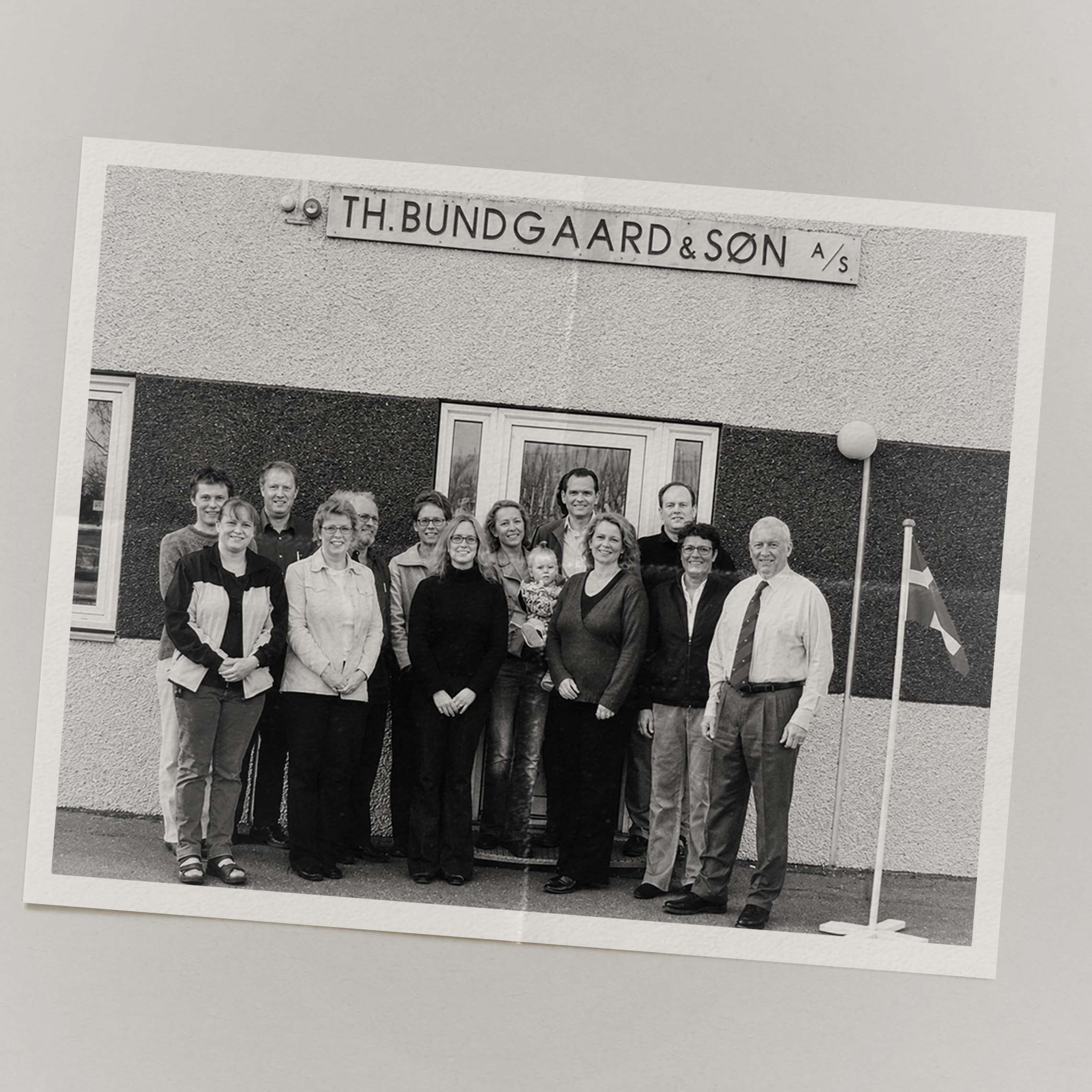
On April 1, 2004, Bundgaard celebrated its 100th anniversary. For an entire century, the company had remained in the hands of the Bundgaard family and had been passed down from Thorvald to subsequent generations. What began as a shoe factory in Esbjerg had evolved into an international children’s shoe company shaped by three generations.
Two years later, in 2006, the company was sold. This brought to a close more than a century of the Bundgaard family as the company’s direct owners.
Anniversary photo, 2004
Today | Supporting First Steps Since 1904
More than 120 years after Thorvald Emil Bundgaard gave the company its name, the family’s history and expertise in shoemaking remain an integral part of Bundgaard’s foundation. Over the years, the company has evolved. New knowledge has been gained, production methods have changed, and our understanding of children’s feet, movement, materials, and construction has continued to grow.
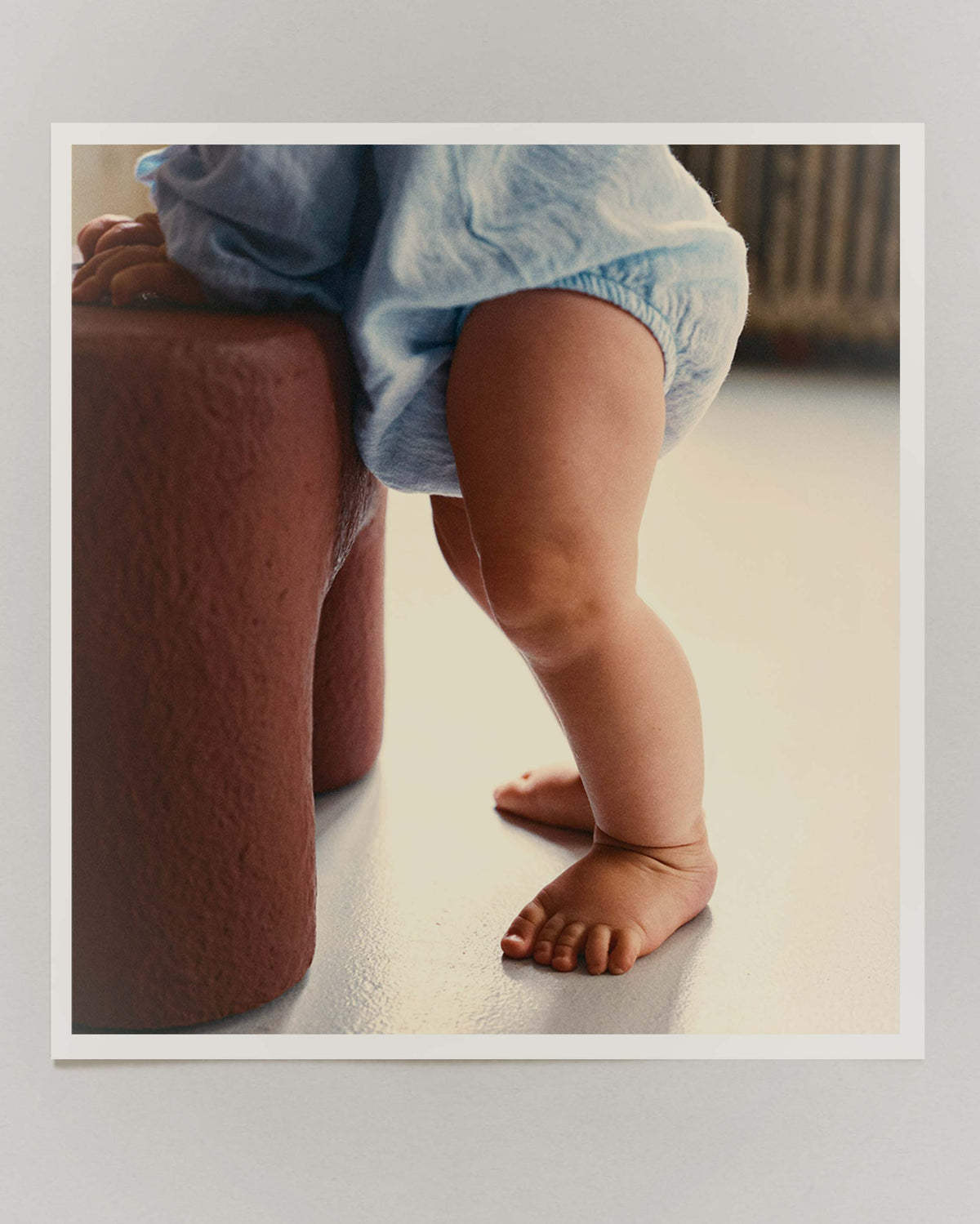
Today, we continue to build on that experience with a special focus on the earliest stages of a child’s movement, from the first supported steps to the first independent ones. Bundgaard has been shaped over generations, and we continue to create children’s shoes for the generations that will follow us.